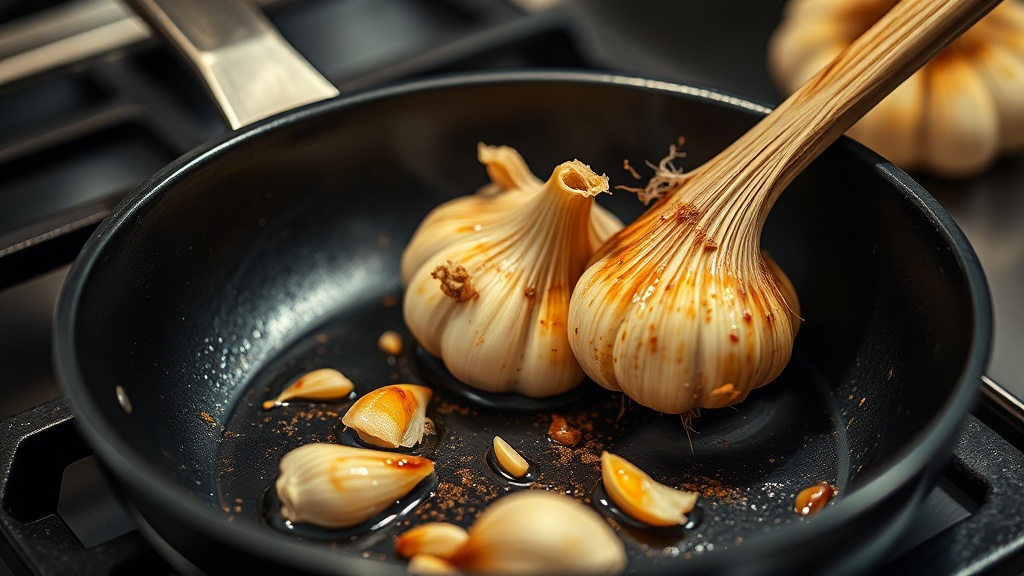
Why Your Garlic Is Burning in the Pan

Quick Tip
Always add minced garlic during the last 30 to 60 seconds of sautéing your aromatics to prevent burning.
The Science of Scorched Garlic
Most home cooks assume that burning garlic is simply a matter of bad luck or high heat, but it is actually a predictable chemical reaction. When garlic hits a hot pan, the sugars and sulfur compounds undergo rapid thermal degradation. If you add garlic at the same time you add your onions or at the beginning of a sauté, you are almost guaranteed to end up with a bitter, black residue that ruins the entire base of your dish. Understanding the timing of your aromatics is the difference between a balanced sauce and a ruined dinner.
The Temperature Problem
The primary culprit is the pan's surface temperature. Garlic contains high concentrations of sugars that caramelize quickly, but it transitions to carbonization (burning) almost instantly once the temperature exceeds a certain threshold. If you are using a heavy Cast Iron Skillet, the heat retention is much higher, meaning the garlic will burn even after you turn the flame down.
To avoid this, follow these three technical rules:
- The Late Addition Rule: Always add minced garlic during the last 60 seconds of sautéing your aromatics. If you are making a traditional Bolognese, your onions and carrots should be soft and translucent before the garlic even touches the oil.
- The Fat Buffer: Ensure your garlic is submerged in enough fat—whether it is extra virgin olive oil, unsalted butter, or clarified ghee. The fat acts as a thermal buffer, distributing heat more evenly than direct contact with the metal.
- The Mince Consistency: A fine mince or a paste (using a Microplane) increases the surface area, which accelerates burning. For dishes that require longer cooking times, use sliced garlic cloves instead of a paste to slow down the oxidation process.
Troubleshooting Bitter Aromatics
If you notice the garlic turning a deep golden brown, it is still safe to use, but you must act immediately. If the garlic turns dark brown or black, the bitterness is irreversible. At this stage, the sulfur compounds have become acrid, and adding more salt or acid will not fix the flavor. If you find your seasoning is consistently off due to temperature control, you might also want to review why your coffee tastes bitter to understand how heat affects different organic compounds.
For a foolproof method, try making a cold-start garlic oil. Place your garlic and oil in a pan while the pan is still cold, then slowly bring the heat up. This allows the flavors to infuse the fat without the sudden thermal shock that leads to scorching.