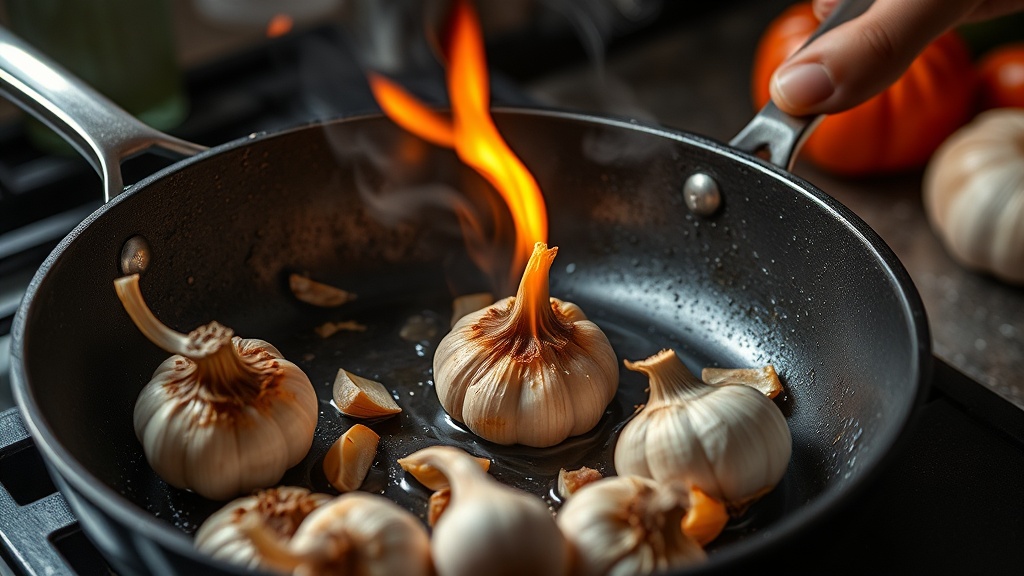
Why Your Garlic Always Burns in the Pan

Quick Tip
Always add minced garlic during the last 30 to 60 seconds of sautéing your aromatics to prevent burning.
The scent of bitter, charred garlic can ruin an otherwise perfect pan sauce or pasta dish in seconds. When garlic hits high heat, the sugars and sulfur compounds undergo rapid pyrolysis, turning from aromatic to acrid. This post explains the thermal mechanics behind why garlic burns and how to time your aromatics to ensure a sweet, nutty base rather than a bitter one.
The Temperature Trap
The primary reason garlic burns is the discrepancy between the smoke point of your cooking fat and the scorching point of the garlic itself. If you are sautéing shallots in olive oil at a high heat, the oil might be stable, but the finely minced garlic bits have a massive surface-area-to-volume ratio. This means they absorb heat almost instantly. Once the garlic reaches roughly 350°F (175°C), the cellular structure collapses and the sugars carbonize.
To avoid this, follow these three technical adjustments:
- The Cold Start Method: Instead of adding garlic to a screaming hot pan, add your minced garlic to the oil while the pan is still relatively cool. As the oil heats up, the garlic infuses the fat gently. This is the standard technique for making a proper soffritto or a basic garlic oil.
- Mind the Mince: The smaller the dice, the faster the burn. If you are making a long-simmering ragù, use sliced garlic cloves rather than a fine paste. Slices can withstand heat longer and provide a more controlled release of flavor.
- The Liquid Buffer: If your recipe calls for high-heat searing—such as browning chicken thighs—do not add the garlic at the beginning. Wait until the meat is nearly finished, or add a splash of chicken stock or white wine to drop the pan temperature before introducing the aromatics.
Managing Aromatics and Heat
Timing is everything in a professional kitchen. Most home cooks treat garlic as a foundational ingredient like onions, but garlic is a finishing aromatic. If you are building a complex sauce, remember that garlic is much more volatile than onion or celery. If you find your aromatics are losing their punch, it may be because they were subjected to too much heat too early. Understanding how to preserve flavor is just as important as knowing why your whole spices lose flavor so quickly.
Pro Tip: If you see the garlic turning a dark golden brown, it is already past its peak. The ideal color is a pale, translucent straw yellow. If it hits deep amber, the bitterness has already begun.
By controlling the thermal environment and adjusting your timing, you can leverage the deep, savory qualities of garlic without the unpleasant sting of burnt carbon.