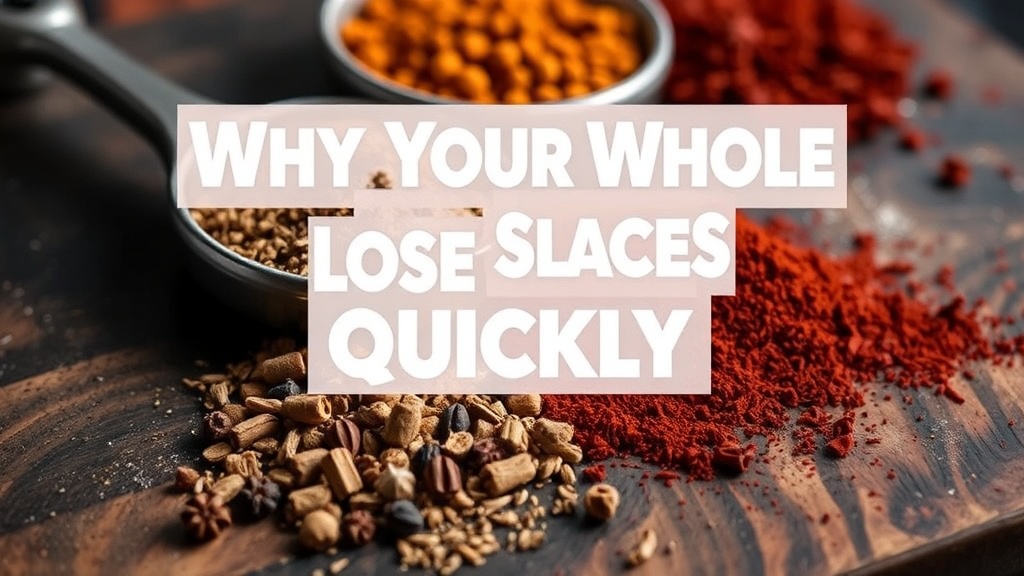
Why Your Whole Spices Lose Flavor So Quickly

Quick Tip
Store whole spices in airtight glass containers in a cool, dark place away from heat and light to preserve their essential oils.
The Science of Volatile Compounds
A single peppercorn or a cinnamon stick contains thousands of volatile organic compounds that provide aroma and flavor. Once these compounds are exposed to light, heat, or oxygen, they begin to evaporate, leaving your spices tasting like nothing more than inert, dusty debris. If your spice rack looks like a collection of colorful powders but lacks any olfactory punch, you are likely dealing with oxidation and evaporation.
To maintain the integrity of your pantry, you must treat spices as perishable ingredients rather than shelf-stable commodities. The primary enemies of spice potency are three-fold: light, heat, and oxygen.
Control the Environment
Where you store your spices is just as important as the spices themselves. Avoid the "culinary cliché" of storing spices on a rack directly above or next to your stove. The constant fluctuations in temperature and the rising steam from a simmering pot of pasta or a perfect pan sauce will accelerate the degradation of essential oils. Instead, keep your spices in a cool, dark cupboard or a pantry away from heat-generating appliances.
- Use Opaque Containers: If you buy spices in clear glass jars, move them to airtight, opaque tins. UV light breaks down the chemical structures of spices like turmeric and paprika rapidly.
- Airtight Seals: Ensure every lid is tight. Oxygen is the catalyst for oxidation, which turns vibrant spices dull and flavorless.
The Rule of Whole vs. Ground
The most effective way to preserve flavor is to buy spices in their whole form and grind them only when necessary. A whole nutmeg or a star anise acts as a natural protective shell for the volatile oils inside. Once a spice is ground into a powder, the surface area increases exponentially, allowing oxygen to attack the flavor molecules much faster.
For the best results, invest in a high-quality heavy mortar and pestle or a dedicated spice grinder. When you are ready to cook, grind small batches rather than pre-grinding your entire supply. This technique ensures that the bright, sharp notes of a freshly cracked Tellicherry peppercorn or a toasted cumin seed hit your dish at their absolute peak.
"The difference between a mediocre dish and a professional one often comes down to the freshness of the aromatics. A spice that has lost its volatile oils can no longer provide the structural backbone of a recipe."