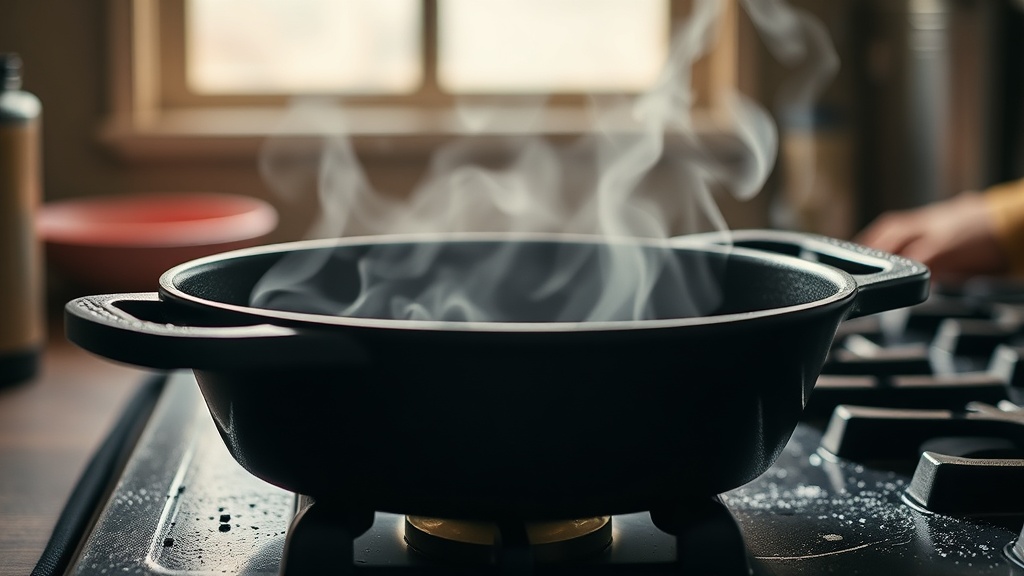
Why Your Cast Iron Skillet Is Sticking and How to Fix It

You drop a piece of salmon into your cast iron skillet, expecting a crisp, golden crust, but instead, the skin tears away in ragged, grey strips, leaving the protein stuck to the bottom of the pan. This frustration usually stems from one of three technical failures: improper temperature control, a broken polymer layer, or an incorrect fat choice. Understanding the physics of your skillet is the difference between a ruined dinner and a professional-grade sear. This guide breaks down the science of seasoning and the mechanical reasons why your food is sticking so you can restore your pan to its optimal non-stick state.
The Science of the Seasoning Layer
To fix a sticking pan, you must first understand what seasoning actually is. It is not a coating applied to the surface; it is a layer of polymerized oil. When you heat a fat—such as grapeseed oil or flaxseed oil—to its smoke point, the molecules undergo a chemical reaction called polymerization. This process turns the liquid oil into a hard, plastic-like solid that is chemically bonded to the iron. This layer fills the microscopic pores of the cast iron, creating a smooth, hydrophobic surface.
If your pan is sticking, your seasoning layer has likely failed in one of two ways. Either the layer is too thin and uneven, leaving the raw, porous iron exposed to the food, or the layer has become "gummy." A gummy layer occurs when you apply too much oil during the seasoning process without heating it long enough to fully polymerize. This creates a sticky, unstable residue that attracts food particles rather than repelling them.
Common Causes of Sticking
Identifying the specific culprit in your kitchen will save you hours of unnecessary scrubbing. Most issues fall into these categories:
- Thermal Shock: Adding cold protein to a hot pan or dropping the temperature too quickly with wet ingredients.
- Inadequate Heat Distribution: Cast iron is a poor conductor of heat compared to copper or aluminum. If you are using a single burner on a standard electric stove, the center may be searing while the edges remain cool, leading to uneven sticking.
- Improper Fat Selection: Using fats with low smoke points, like extra virgin olive oil or unsalted butter, too early in the cooking process.
- Residual Carbonization: Failing to clean out microscopic food particles from previous meals, which then burn and create a rough texture.
How to Fix a Sticking Pan
If your skillet is currently performing poorly, you cannot simply "wash" it back to life. You need to strip the damaged layer and rebuild it. Follow this technical protocol to restore your pan's performance.
Step 1: The Deep Clean
First, you must remove the old, compromised seasoning. Use a heavy-duty scouring pad or a chainmail scrubber with warm water and a small amount of mild dish soap. While many purists argue against soap, a small amount of modern liquid detergent is safe and necessary to strip away old, rancid fats. Scrub until the surface feels smooth to the touch and no longer feels "tacky" or greasy. If there is burnt-on carbon, you may need to use a specialized oven cleaner or a mixture of baking soda and water to lift the debris.
Step 2: Complete Dehydration
Moisture is the enemy of a successful re-seasoning. After washing, dry the pan thoroughly with a lint-free towel. Place the skillet over low heat on your stovetop for five to ten minutes. This ensures that every microscopic drop of water has evaporated from the iron's pores. If any moisture remains, the oil will not bond to the metal, and you will end up with a blotchy, ineffective surface.
Step 3: The Precision Oil Application
Choose a high-smoke point oil. For home cooks, I recommend grapeseed oil or avocado oil because they remain stable at high temperatures. Avoid using olive oil for this stage, as it can lead to a sticky residue. Using low-quality or low-smoke point oils can actually degrade the quality of your seasoning over time.
Apply a very small amount of oil to the pan. The most common mistake is applying too much. You want to wipe the oil onto the surface, and then—this is the critical step—take a clean paper towel and wipe it all off. The pan should look almost dry. You are not greasing a pan for frying; you are applying a microscopic film that will polymerize. If you see visible pools or streaks of oil, you have applied too much.
Step 4: The Heat Cycle
Place the pan in a preheated oven at 450°F (230°C). Position the skillet upside down on the middle rack to prevent any excess oil from pooling in the bottom. Bake the pan for one hour. After the hour is up, turn off the oven and let the pan cool completely inside the oven. This slow cooling process helps the polymer layer stabilize. For a truly robust seasoning, repeat this process two or three times.
Preventative Maintenance and Cooking Techniques
Once your pan is restored, you must change your cooking habits to maintain the integrity of the seasoning. A well-seasoned pan is a living tool that requires specific handling.
Temperature Management
The most frequent reason for sticking is failing to wait for the pan to reach the correct temperature. You should use the "water droplet test." Flick a few drops of water onto the skillet. If the water sizzles and evaporates instantly, the pan is ready. If the water dances around in a single bead (the Leidenfrost effect), the pan is extremely hot and ready for high-heat searing. If you add food before this stage, the proteins will bond to the iron before the steam can create a barrier.
Furthermore, be mindful of your heat source. If you are cooking delicate items like garlic or herbs, you must lower the heat. If your garlic always burns in the pan, it is a sign that your heat management is too aggressive for the ingredients. High-heat searing is for proteins; low-heat aromatics require a much gentler touch.
The "Release" Rule
One of the most important technical aspects of cooking with cast iron is patience. When you sear a steak or a piece of fish, the food will naturally "stick" to the pan initially. This is part of the Maillard reaction and the protein's structural change. Do not attempt to flip the food prematurely. As the crust forms and the proteins denature, the food will naturally "release" from the surface. If you feel resistance when trying to lift a piece of meat, wait another 60 seconds. Forcing a spatula into the pan will tear the seasoning and the food simultaneously.
Daily Cleaning Protocol
To keep your seasoning intact, avoid the temptation to use abrasive scrubbers after every meal. After cooking, while the pan is still slightly warm, rinse it with hot water and a stiff brush. Dry it immediately on the stovetop over low heat. Once dry, apply a microscopic film of oil to the surface before storing it. This prevents oxidation (rust) and keeps the surface slick for your next cook.
By treating your cast iron as a precision instrument rather than a heavy piece of metal, you will find that the sticking issues disappear. Focus on the chemistry of the oil, the heat of the pan, and the patience of the release, and your skillet will serve you for decades.
Steps
- 1
Clean and Dry Thoroughly
- 2
Apply a Thin Layer of Oil
- 3
Heat the Pan in the Oven
- 4
Buff Out Excess Oil