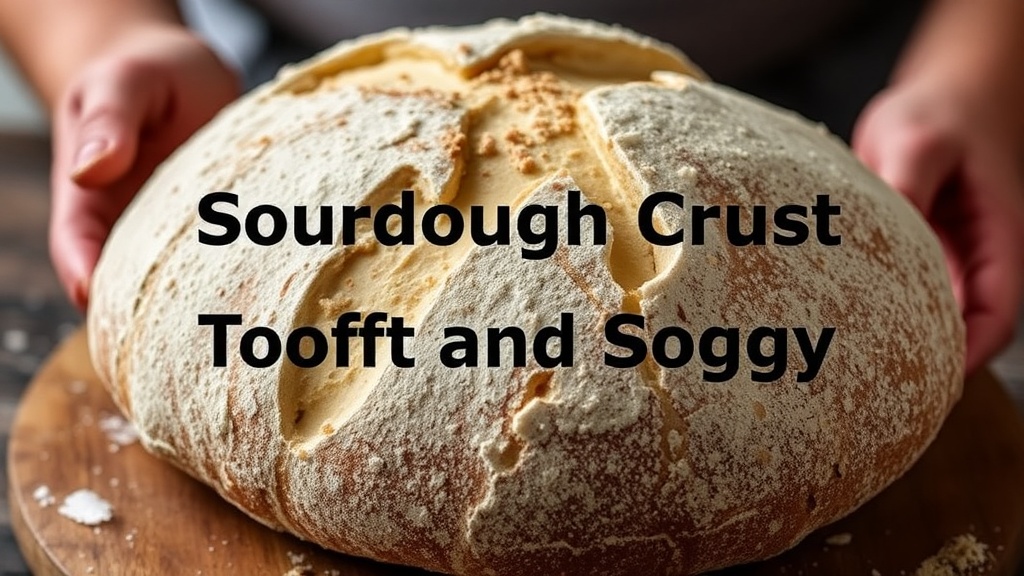
Why Your Sourdough Crust Is Too Soft and Soggy

A standard loaf of sourdough can lose up to 30% of its crispness within just two hours of leaving the oven if the cooling process is not strictly controlled. A soft, soggy crust is rarely the result of a single mistake; rather, it is a mechanical failure occurring at the intersection of steam management, thermal retention, and moisture evaporation. This guide breaks down the technical reasons your crust is failing to achieve that coveted shatter-crisp texture and provides specific adjustments to your baking workflow to ensure a professional-grade finish.
The Role of Steam and Gelatinization
The first stage of crust formation is the gelatinization of starches on the surface of the dough. As the dough heats up, the starches absorb moisture and swell, creating a thin, translucent film. If you do not introduce sufficient steam during the first 15 to 20 minutes of baking, this film will set too early, creating a thick, leathery skin rather than a thin, crisp one. This is why many home bakers struggle with a "tough" rather than "crisp" crust.
In professional bakeries, steam injection systems are used to keep the surface of the dough elastic for longer, allowing for maximum oven spring. At home, you can replicate this using a Dutch oven or a baking stone with a steam pan. The Dutch oven method is generally superior because it traps the steam released by the dough itself, creating a micro-environment of high humidity. If you are baking on an open stone without a lid, you must introduce steam—either by placing a cast iron pan with boiling water at the bottom of the oven or by using a spray bottle to mist the oven walls (though be extremely careful with oven temperature fluctuations and glass safety).
Why the Dutch Oven Method Works
The Dutch oven acts as a pressurized vessel. The moisture evaporating from the dough stays trapped under the lid, keeping the surface of the loaf soft and extensible. This allows the gases produced by the yeast to expand the loaf to its full potential before the crust hard effectively. If you pull the lid too early—before the 20-minute mark—the crust will set prematurely, resulting in a dense, stunted loaf with a lackluster exterior.
Thermal Conductivity and Oven Temperature
A common culprit for a soft crust is an insufficient baking temperature. If your oven is not hot enough, the moisture in the dough will evaporate slowly, leading to a "steamed" texture rather than a "baked" one. To achieve a hard, crisp crust, you need a high initial heat to trigger rapid evaporation and starch gelatinization.
For most sourdough recipes, you should preheat your oven and your baking vessel (Dutch oven or baking stone) to at least 450°F (232°C). This high heat ensures that the moment the dough hits the surface, the moisture is forced toward the exterior. If you find your crust is consistently pale and soft, check your oven's calibration with an external thermometer. Many residential ovens, even those with digital displays, can be off by 25°F or more, which is enough to prevent the crust from properly dehydrating during the final stages of baking.
The Critical Cooling Phase
The most frequent mistake occurs after the loaf leaves the oven. A loaf of bread is not "finished" when it stops browning; it is finished when it has finished cooling. While the bread is hot, the interior is still a high-moisture environment. If you leave the bread in the Dutch oven or a closed container, the steam escaping the loaf will immediately condense on the crust, turning it soft and even gummy.
Follow these strict cooling protocols:
- Use a Wire Cooling Rack: Never place a hot loaf on a flat surface like a wooden cutting board or a stone countertop. Air must circulate underneath the loaf. If the bottom of the bread sits on a solid surface, the residual steam will collect underneath, creating a "soggy bottom" that stays wet for hours.
- The 2-Hour Rule: Do not slice into your sourdough for at least two hours. Slicing too early releases the internal steam prematurely, which can cause the crust to collapse and the interior to become gummy.
- Avoid Plastic Immediately: Never wrap a warm loaf in plastic wrap or place it in a bread box until it has reached room temperature. This is the fastest way to ruin a perfectly baked crust.
Crust Thickness vs. Crust Crispness
There is a technical distinction between a thick crust and a crisp crust. A thick crust is often the result of an over-proofed dough or a lack of steam, leading to a heavy, bread-like exterior. A crisp crust, however, is thin, brittle, and shatters when bitten. To achieve the latter, you must focus on the final stage of the bake: the "drying" phase.
After you remove the lid from your Dutch oven (usually around the 20-minute mark), the loaf should be browning beautifully. This is the time to lower the heat slightly and allow the bread to bake "openly." This stage is crucial for dehydrating the surface. If you stop the bake as soon as the color looks right, you are likely leaving too much residual moisture in the crust. Continue baking until the loaf reaches a deep, mahogany color. This deeper caramelization—the result of the Maillard reaction—is a sign that the sugars and amino acids have fully reacted and the moisture has been sufficiently driven out.
Managing Ambient Humidity
If you live in a high-humidity environment, your crust will struggle to stay crisp regardless of your baking technique. In these cases, you may need to extend the drying phase of your bake. Once the bread has finished its primary bake, you can turn the oven off, crack the door slightly (using a wooden spoon to hold it ajar), and let the loaf sit in the cooling oven for 10 to 15 minutes. This controlled descent in temperature helps the crust harden before it hits the ambient moisture of your kitchen.
Troubleshooting Common Crust Issues
If you have followed the steps above and are still seeing issues, look at these specific variables:
The "Leathery" Crust
If your crust is tough and difficult to chew rather than crispy, you likely had too much steam or too much flour on the surface of the dough. While dusting the proofing basket with rice flour or semolina is standard, an excess of flour can create a barrier that prevents the crust from developing its characteristic texture. Ensure your flour dusting is light and consistent.
The "Pale and Soft" Crust
This is almost always a temperature or sugar issue. If your dough has a high sugar content (uncommon in traditional sourdough but possible in enriched doughs), it may brown too quickly, leading you to pull it out before the crust has actually hardened. If you are using a traditional sourdough, a pale crust usually means your oven wasn't hot enough or you didn't bake it long enough in the "open" stage.
The "Soggy Bottom"
This is a ventilation failure. If the bottom of your loaf is wet or soft, you are either not using enough heat at the start of the bake, or you are not using a cooling rack. If you are baking on a baking stone, ensure the stone is properly preheated for at least an hour. A cold stone will not provide the immediate thermal shock needed to set the bottom crust.
Achieving the perfect sourdough crust is a matter of managing thermodynamics. By controlling the steam during the first half of the bake and ensuring thorough dehydration during the second half, you move from the realm of "home baker" into the precision of a professional. Focus on the cooling process as much as the baking process, and your sourdough will maintain its structural integrity and crunch long after it leaves the oven.