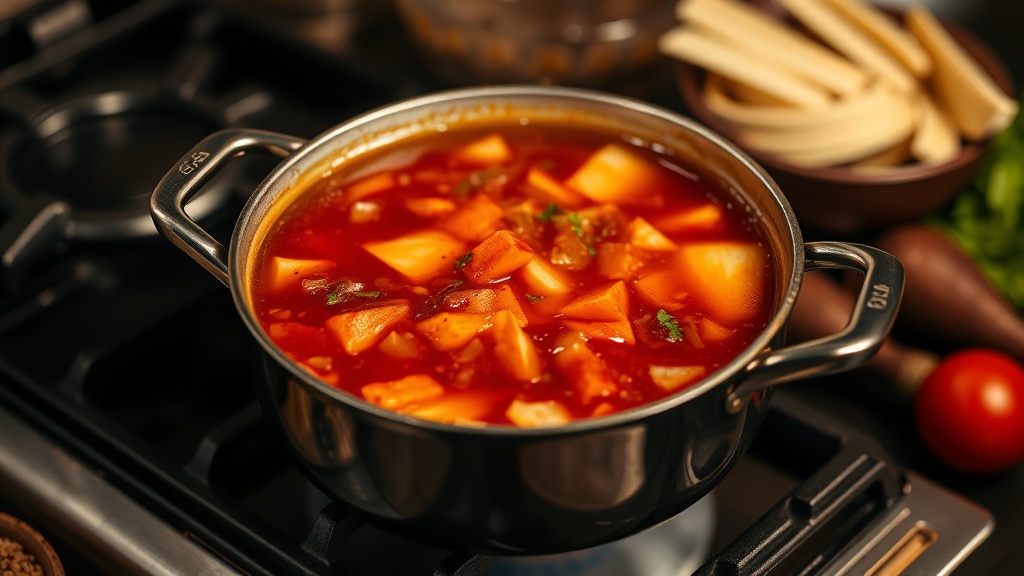
Why Your Homemade Stock Always Tastes Thin and Weak

Most home cooks believe that a good stock requires a massive amount of meat or a heavy hand with salt. They think that if the liquid doesn't taste intensely savory right away, it's a failure. This is a fundamental misunderstanding of how flavor is built. A truly great stock—the kind that forms the backbone of a restaurant-quality sauce—isn't about salt; it's about the slow extraction of gelatin and the structural development of flavor through time and temperature. If your stock tastes like flavored water, you aren't lacking ingredients; you're lacking the chemical foundation of collagen extraction.
A stock is a liquid-based extraction of flavor from bones, vegetables, and aromatics. Unlike a soup, which is a finished dish, a stock is a functional ingredient. It provides body, mouthfeel, and a way to carry flavors in a sauce or braise. To get that velvety, lip-sticking quality, you have to understand that you aren't just making a liquid; you're creating a gelatinous suspension. Without that gelatin, your sauces will always feel thin and watery, no matter how much you reduce them.
What is the difference between stock and broth?
The distinction is often lost in casual conversation, but in a professional kitchen, the difference is structural. A broth is often made by simmering meat (rather than bones) and is intended to be eaten as a liquid. It's usually thinner and more seasoned. A stock, however, is made primarily from bones. The presence of bones—specifically those with high collagen content like knuckles, necks, or feet—is what provides the gelatin. This gelatin is the secret to that heavy, luxurious mouthfeel that distinguishes a professional demi-glace from a home-cooked broth. If you want a stock that can hold up against a rich ragu or a sophisticated pan sauce, you need bones that have been roasted to provide depth and collagen to provide body.
When you roast your bones, you aren't just adding color; you're initiating the Maillard reaction. This chemical reaction between amino acids and reducing sugars creates the complex, savory notes that define deep flavor. If you skip the roasting step or use low heat, you'll end up with a pale, one-dimensional liquid. A good stock should have a deep amber hue and a viscosity that clings to the back of a spoon. For more on the science of flavor development, the Exploratorium offers excellent resources on how heat transforms ingredients.
How do I make a stock that isn't bitter?
The most common mistake I see is the "boil-over." Many people think that a violent, rolling boil is necessary to extract flavor. In reality, a hard boil often emulsifies fat and impurities into the liquid, resulting in a cloudy, greasy, and sometimes bitter stock. Instead, you want a gentle simmer. You're looking for tiny, lazy bubbles breaking the surface—what we call a "lazy simmer." This keeps the liquid clear and prevents the fat from breaking down into the broth, which can lead to a rancid or off-putting taste.
Another culprit for bitterness is the way you handle your aromatics. Mirepoix (onions, carrots, and celery) is the standard, but if you don't sweat or roast them properly, they can add a vegetal, slightly acrid note. I always recommend adding a bit of tomato paste during the roasting phase of your bones. The acidity in the tomato helps break down the connective tissue and adds a subtle brightness that cuts through the heavy protein flavors. If you find your stock is still a bit one-dimensional, a splash of high-quality vinegar or a bit of lemon juice at the very end of the process can act as a structural stabilizer for the flavor profile.
The Essential Stock Components
- The Bones: Focus on connective tissue. Chicken necks, feet, and backs are gold for poultry stock. For beef, use marrow bones and knuckle bones.
- The Aromatics: Onions, carrots, and celery are the trinity. Don't forget the leek tops or parsley stems for extra depth.
- The Liquid: Use cold, filtered water. Starting with cold water allows for a more gradual extraction of proteins and prevents the rapid release of impurities.
- The Acid: A small amount of tomato paste or a touch of wine helps with the extraction process.
Can I use store-bought stock as a base?
You can, but you'll be fighting an uphill battle. Most commercial stocks are essentially flavored water with salt and yeast extract. They lack the gelatinous structure required for true culinary work. If you are in a pinch, look for products that list "chicken bones" or "beef bones" as a primary ingredient rather than just "chicken flavor." However, the goal of this guide is to move you away from the carton and toward the pot. A homemade stock is an investment in every meal you make for the next three days. Once you have a stock in the fridge, your ability to build sauces, stews, and even risotto changes completely.
To ensure your stock is successful, keep a close eye on the fat. As the stock simmers, a layer of fat will rise to the top. Use a ladle or a fine-mesh skimmer to remove this regularly. If you leave the fat in, it will eventually oxidize and turn your stock heavy and greasy. For a truly professional finish, once the stock is done, let it cool completely in the refrigerator. This allows the gelatin to set into a firm jelly, making it incredibly easy to scrape off the solidified fat layer before you use it or freeze it. This technique is a staple in French technique and is worth reading more about on culinary authority sites.
| Problem | Likely Cause | Solution |
|---|---|---|
| Cloudy Liquid | Boiling too hard | Maintain a gentle simmer |
| Bitter Taste | Burnt vegetables or excess char | Roast aromatics gently; add acid |
| Watery Texture | Not enough bones/collagen | Use more connective tissue (feet, necks) |
| Greasy Mouthfeel | Unskimmed fat | Skim the surface regularly |
Think of stock as the foundation of a building. You can have beautiful windows and a striking roof, but if the foundation is weak, the whole structure is compromised. When you treat your stock with the respect it deserves—by focusing on bone quality, temperature control, and gradual extraction—you aren't just making a liquid. You're building the fundamental flavor that will define your cooking for a long time to come.