Why Your Emulsions Break and How to Fix Them

Why do my sauces keep splitting?
Have you ever stood over a stove, watching a beautiful, velvety sauce slowly separate into a greasy puddle of oil and water? It is a frustrating sight. Whether you are making a classic Hollandaise or a simple vinaigrette, an emulsion is essentially a forced marriage between two substances that naturally want to stay apart: oil and water. When that marriage fails, the sauce "breaks." Understanding why this happens isn't just about following a recipe; it is about understanding the physics of tension and the behavior of molecules.
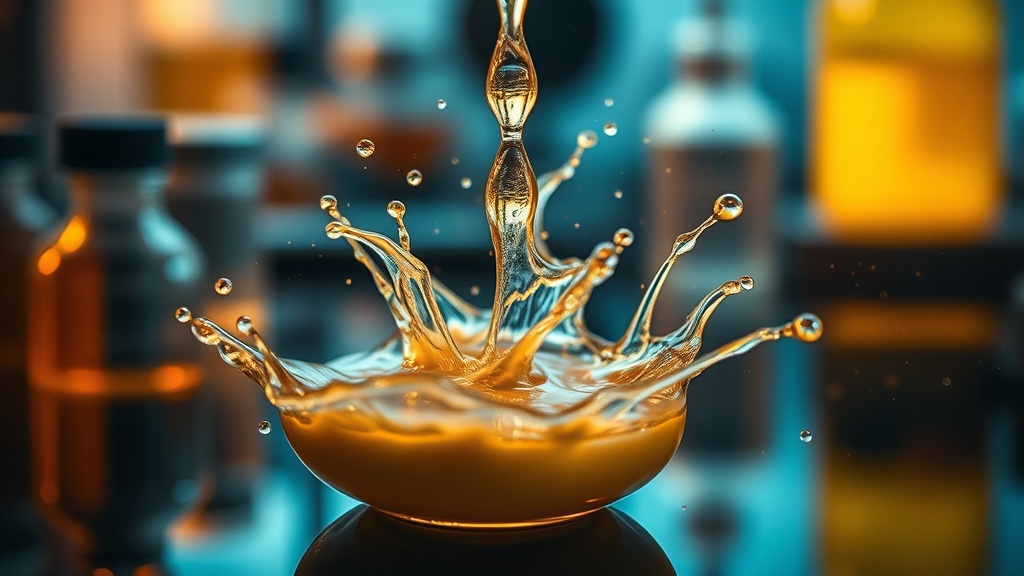
An emulsion occurs when you take a liquid (the continuous phase) and disperse tiny droplets of another liquid (the dispersed phase) throughout it. In a vinaigrette, the oil is the dispersed phase. In a mayonnaise, the oil is also the dispersed phase, but it is stabilized by lecithin, a powerful emulsifier found in egg yolks. When the ratio of oil to water gets out of balance, or when temperature fluctuations occur, the droplets collide and merge, causing the sauce to break. It is a delicate dance of physics that happens right in your pan.
The Role of Emulsifiers in Stability
To create a stable sauce, you need a mediator. This is where emulsifiers come in. An emulsifier is a molecule with a dual personality: one end is hydrophilic (water-loving) and the other is lipophilic (fat-loving). This allows the molecule to sit at the boundary of the oil and water, acting as a buffer that prevents the droplets from clumping together. Without a strong emulsifier, your sauce is a ticking time bomb of separation.
Common kitchen emulsifiers include:
- Lecithin: Found heavily in egg yolks, this is the gold standard for sauces like Hollandaise or Caesar dressing.
- Mustard: The tiny particles in ground mustard act as physical barriers that help stabilize vinaigrettes.
- Honey: A viscous stabilizer that can help slow down the separation in certain syrups.
- Casein: The protein in milk that helps stabilize the fats in a creamy sauce.
If you want to see the molecular breakdown of how these substances interact, the Britannica entry on emulsions provides a deep dive into the fluid dynamics involved.
Common Culprits of Broken Sauces
If your sauce is splitting, one of these three things is likely the culprit:
- Temperature Extremes: If you are making a warm emulsion like a Hollandaise and your heat is too high, the proteins in the egg will cook and tighten, squeezing the fat out. Conversely, if the sauce gets too cold, the fats can solidify and break the bond.
- Adding Oil Too Quickly: This is the most common error in home kitchens. If you pour the oil in a heavy stream rather than a thin, steady drip, the droplets will collide and coalesce faster than the emulsifier can wrap around them.
- Incorrect Ratios: There is a physical limit to how much fat a certain amount of water can hold. If you push past that limit, the sauce will fail.
How Can I Fix a Broken Sauce?
The good news is that a broken sauce isn't always a lost cause. In many cases, you can perform a bit of kitchen alchemy to bring it back to life. If your vinaigrette or mayonnaise has broken, try these methods:
The New Base Method: Place a fresh egg yolk or a teaspoon of Dijon mustard in a clean bowl. Slowly—and I mean slowly—whisk your broken, oily mixture into this new, stable base. The new emulsifier will grab the stray oil droplets and pull them back into a cohesive structure.
The Water Method: For many oil-based emulsions, adding a teaspoon of warm water can help. The water increases the volume of the continuous phase, giving the oil droplets more room to move without hitting each other. Whisk vigorously while adding the water in small increments.
Technical Tips for Success
To prevent breakage before it happens, pay attention to your physical movements. When whisking, you aren't just mixing; you are creating mechanical energy. You need to break that oil into the smallest possible droplets. A whisk is better than a spoon because it creates more turbulence, which helps the emulsification process.
For more advanced technical breakdowns of kitchen chemistry, the Exploratorium Food Science resources are an excellent way to understand the mechanics of what is happening in your skillet. If you are working with heat, remember that stability often requires a constant, low temperature. A bain-marie (water bath) is your best friend when working with delicate emulsions like Bearnaise or Hollandaise, as it provides a gentle, indirect heat that prevents the proteins from overcooking.
| Problem | Likely Cause | Quick Fix |
|---|---|---|
| Sauce is oily/greasy | Too much oil added too fast | Whisk in a teaspoon of warm water |
| Sauce is grainy | Temperature too high | Remove from heat, add a tiny bit of water |
| Vinaigrette won't thicken | Not enough agitation | Whisk more vigorously or add mustard |
Precision is the difference between a sauce that coats a spoon and a mess on a plate. Whether you're working with a heavy cream or a light citrus-based dressing, respect the ratio and the speed of your pour. It is a matter of patience, not just skill.