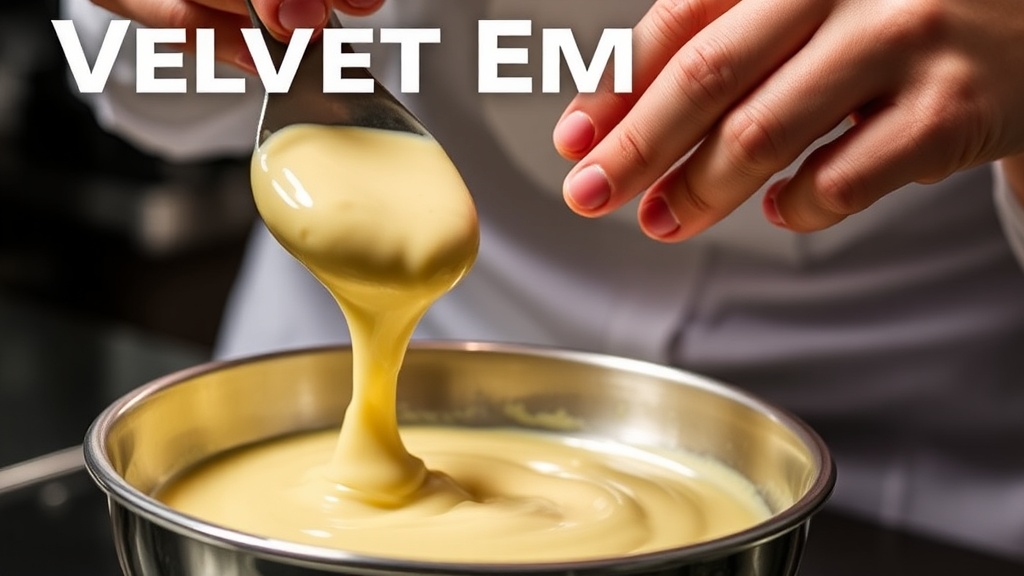
Velvet Emulsions: Achieving Perfect Mayonnaise via Temperature Control

Quick Tip
Always ensure your oil and egg yolk temperatures are closely aligned to prevent the emulsion from breaking.
Have you ever watched a beautiful emulsion break into an oily, unappealing mess just as you were reaching the final stage?
The difference between a grainy, broken sauce and a velvet-smooth mayonnaise often comes down to a single, overlooked variable: thermal stability. While many home cooks focus on the speed of the whisk or the quality of the oil, the kinetic energy of your ingredients is what truly dictates the success of the emulsion. An emulsion is essentially a suspension of microscopic oil droplets within a continuous phase of water and lecithin. If the temperature fluctuates too wildly, those droplets coalesce, and the structure collapses.
The Temperature Paradox
To achieve a stable, professional-grade mayonnaise, you must manage the temperature of both your base and your lipid source. The most common mistake is using eggs straight from a cold refrigerator. A cold egg yolk lacks the fluidity required to distribute the lecithin—the emulsifier—effectively through the oil. For a foolproof result, ensure your yolks are at room temperature (approximately 21°C/70°F) before you begin.
Conversely, if you are using a high-quality, cold-pressed oil for depth and texture, be aware that these oils can be more sensitive to heat. If your oil is too cold, it may not integrate smoothly; if it is too warm, it can actually "cook" the proteins in the yolk, causing the emulsion to fail instantly. Aim for an oil temperature that is also near room temperature to maintain a gentle, controlled integration.
Technical Execution: The Slow Drip Method
Follow these specific steps to ensure a stable, high-viscosity finish:
- Prepare the Base: In a glass or stainless steel bowl, combine one large room-temperature egg yolk, a teaspoon of Dijon mustard (which provides additional mucilage for stability), and a teaspoon of Sherry vinegar.
- The Initial Hydration: Add exactly one teaspoon of warm water or lemon juice to the yolk. This creates a sufficient aqueous phase for the oil to latch onto.
- The Precision Pour: Begin adding your oil—such as a neutral grapeseed oil or a light extra virgin olive oil—drop by drop. Do not increase the flow until the oil is fully incorporated and the mixture has thickened.
- The Stabilization Phase: Once the emulsion has reached a certain viscosity, you can move to a thin, steady stream. If the mixture feels too thick or begins to look "tight," whisk in a few drops of warm water to relax the proteins before adding more oil.
"A perfect emulsion is a balance of tension. If the sauce looks shiny but feels heavy, you have reached the limit of the yolk's capacity. Back off the oil immediately."
By controlling the thermal environment, you aren't just making a condiment; you are engineering a stable, luxurious texture that will hold its shape on a plate of blanched asparagus or a seared piece of fish.