The Startup Kitchen: Women Builders Reshaping Food in 2026

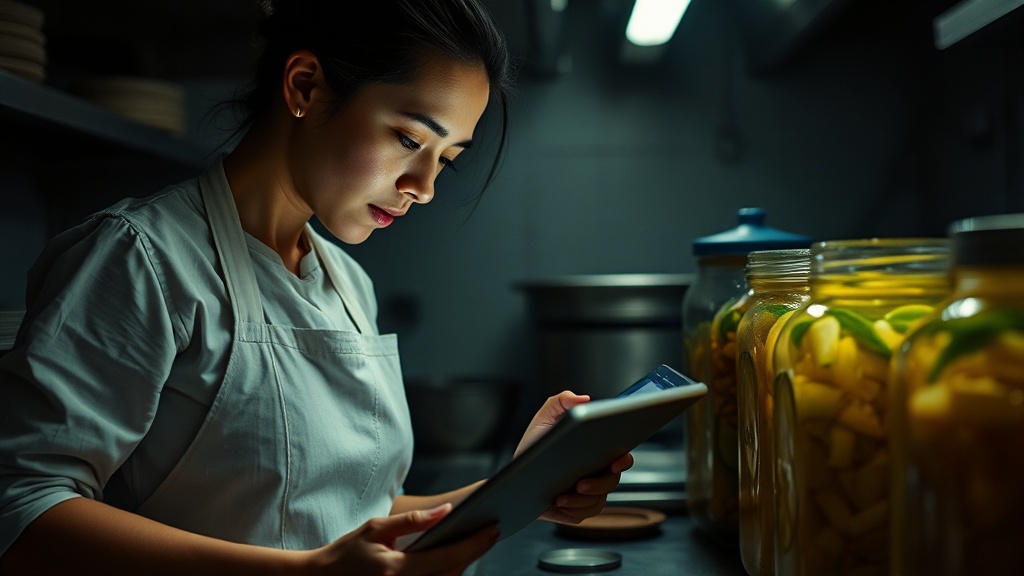
Picture a Friday night in a restaurant kitchen, mid-service. Your fermentation program — the one you've spent eighteen months developing, the one that's become the backbone of your menu's identity — goes sideways. The house-made koji miso you've been aging since October smells wrong. Not catastrophically wrong. Just slightly, inexplicably off. And you have no idea when it shifted, because you were busy, and your line cooks were busy, and nobody was monitoring the pH curve in real time because that's not a thing most kitchens can do. You comp the table their desserts and you move on, but something nags at you.
That specific frustration — the unmonitored ferment, the consistency that breaks under the pressure of scale — is what a growing cohort of women founders are building technology to solve. Not because they read about it on a startup forum. Because they lived it.
The Founding Story Isn't a Pitch Deck. It's a Resume.
The pattern I keep encountering when I look at the most compelling women-led food tech companies right now is one of earned frustration. These aren't founders who spotted an "underserved market" and applied technology to it. These are former chefs, food scientists, supply chain managers, and fermentation nerds who got tired of duct-taping solutions together in professional environments that should have had better tools decades ago.
Jasmine Crowe built Goodr — a food waste logistics platform that connects commercial kitchens, hotels, and event venues with community organizations — after watching a restaurant throw away hundreds of pounds of perfectly good food while people a few blocks away went hungry. That's not a pitch deck insight. That's standing in an alley next to a dumpster and deciding you're not going to do this anymore. Goodr's approach (real-time pickup coordination, tax-deduction documentation, transparent impact reporting) isn't Silicon Valley fantasy tech. It's solving an actual operations problem that exists because commercial kitchen surplus has always been difficult to move quickly and legally.
That specificity — the knowledge that comes from having actually worked in the industry — is the differentiating factor. And it shows up in the product decisions.
The Tech That Actually Makes Sense in a Kitchen
Let me be precise about what I mean by "relevant technology," because a lot of food tech investment has historically gone toward things that solve problems nobody in a working kitchen actually has. (The ghost kitchen bubble of the early 2020s. The AI menu optimization tools that couldn't account for a Saturday night when your fish delivery was late. You know what I'm talking about.)
The interesting work happening right now is more granular and more honest about what kitchens need.
Fermentation monitoring is one of the clearest examples. Commercial fermentation — koji, lacto-fermented vegetables, vinegars, hot sauces — has always been equal parts art and educated guessing. pH strips and a cook's intuition have been the primary instruments. What's emerging is affordable sensor technology combined with accessible data logging that lets a small production kitchen track temperature, pH, and CO₂ output over time without a food science lab. The founders building these tools aren't trying to automate the fermentation process; they're trying to give the fermenter better information so the human decisions get sharper. That's a meaningful distinction. You're not replacing the nose. You're building a better notebook.
Precision temperature equipment designed for small production is another area. The sous vide revolution was real but incomplete — the equipment came down in price, but the workflow integration for production-scale cooking (not just a single bag in a 20-quart cambro) remained clunky and expensive. Several founders are now solving the middle tier: the small restaurant or specialty food producer who needs consistent precision across multiple setups but can't afford industrial immersion circulators. The margins in this space require you to understand both the engineering and the actual cooking workflow. Founders who've worked the line understand that a tool failing at 9 PM on a Saturday is a different category of problem than a tool failing at 2 PM on a Tuesday.
Supply chain transparency platforms are getting more sophisticated and more practical. The locavore sourcing movement of the 2010s was philosophically correct and logistically exhausting — small producers couldn't always provide the documentation, consistency, or volume that restaurants needed, and the relationship management required was enormous. What's emerging now is lighter-weight sourcing infrastructure: platforms that aggregate regional producer data, track ingredient provenance without requiring a full-time sourcing coordinator, and give chefs actual visibility into what's in season and where to get it. The best of these aren't built on the assumption that you'll always choose local. They're built on the assumption that you want better information to make your own sourcing decisions.
Why the Perspective Difference Matters
I want to be careful here, because I don't think "women founders build better food tech" is a useful generalization. But I do think there's a pattern worth naming: the most technically grounded, kitchen-reality-aware food tech I've seen in the last two years tends to come from founders who understood the problem as practitioners before they understood it as a business opportunity.
The collaboration-over-competition ethos I keep seeing is genuinely different from the winner-take-all logic that drove the first wave of food delivery and ghost kitchen consolidation. I spoke with one founder — running a precision fermentation data tool out of a shared commercial kitchen in Portland — who described her earliest design process as basically calling up every small-batch hot sauce and vinegar producer she knew and asking them what was actually breaking in their workflow. Not "what would you pay for?" Just: what breaks? That inductive approach, starting with existing technique and working backward to identify where technology could serve it, produces very different tools than starting with a technology capability and asking what food application you could apply it to.
There's also a more honest relationship with traditional technique. The food tech wave that promised to replace craft with algorithmic precision (remember the sourdough starter apps that claimed they could "optimize" your fermentation profile?) largely failed to gain traction with serious bakers and fermenters because it misunderstood the role of uncertainty in developing craft knowledge. The founders I find most interesting are the ones who are explicit about what their tools can and can't do — they're building aids for human judgment, not replacements for it.
The Accessibility Question (The One I Actually Care About)
Here's where I want to spend a minute, because this is where Julian the line-cook-turned-photographer has opinions.
For most of food tech's history, "innovation" has trickled down — technology developed for high-end restaurant kitchens slowly became accessible to home cooks, usually at an enormous price premium and usually stripped of the professional context that made it useful. The iSi cream whipper spent years as a Ferran Adrià prop before it became a housewares product. The immersion circulator followed the same arc: research lab and high-end kitchen first, home novelty second, genuinely useful home tool a distant third once the price finally collapsed.
What's different about some of the current women-led startups is a more deliberate focus on the middle tier from the beginning. Not restaurant equipment. Not consumer-grade gadgets. The serious home cook, the small catering operation, the CSA with a value-added product line — these users have historically been ignored by food tech because their price ceiling is inconvenient. A few of the companies I'm watching are building specifically for this user, which means the tools are designed with different constraints: more affordable, more intuitive, more forgiving of kitchens that don't have a prep cook to manage the learning curve.
This matters because the propagation of good technique has always depended on accessibility. When acid-forward cooking, fermentation, and spice-forward flavor profiles migrate from restaurant kitchens to home kitchens, food culture changes. The tools that enable that migration are worth building — and worth paying attention to.
What I'm Actually Watching For in 2026
The International Women's Day feature cycle will produce a lot of "inspiring founders" coverage over the next few weeks. Most of it will focus on funding rounds and valuation. That's not what I'm watching.
I'm watching which of these companies is still operating in 2028. Specifically, I'm watching for:
Durability of the kitchen relationship. Does the tool still make sense to an actual cook after six months of daily use, or does it become a burden? The best kitchen tools disappear into workflow. The bad ones accumulate in drawers next to the melon baller.
Honest marketing about what the technology does. The food tech space has a terrible track record of overclaiming. "AI-powered" anything applied to cooking has mostly meant "we have an algorithm." The founders who describe their tools accurately, who say "this will help you track your fermentation data" rather than "this will perfect your fermentation process," are the ones I trust to still be honest when something goes wrong with the product.
Preservation of tacit knowledge. The best food tech doesn't try to codify craft into a system. It creates better conditions for practitioners to develop their own craft. If a tool requires you to deskill to use it, it's not serving cooking. It's replacing it.
There are women building in this space right now who understand all three of these things. They're worth watching — not because they're women building food tech, but because they're building food tech correctly.
Happy building, but watch the technique.