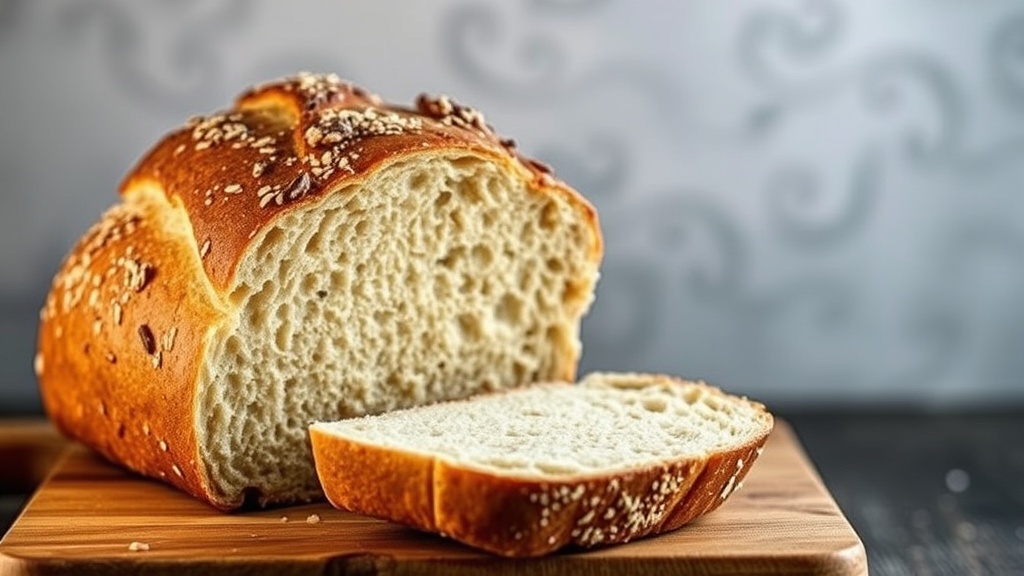
The Art of Homemade Sourdough: A Beginner's Guide to Perfect Loaves

This guide covers the complete process of baking sourdough bread at home, from cultivating a living starter to pulling a golden, crackling loaf from the oven. Understanding the science behind fermentation and the precise techniques required transforms an intimidating craft into a reliable, weekly ritual. By following the methods outlined here, home bakers will produce loaves with the complex flavor, open crumb structure, and blistered crust characteristic of professional artisan bread—without commercial yeast or specialized equipment.
Understanding the Sourdough Starter
The sourdough starter is a living culture of wild yeast and lactobacilli bacteria cultivated in flour and water. Unlike commercial yeast, which contains a single strain of Saccharomyces cerevisiae, a mature starter harbors dozens of microorganisms that contribute to the bread's distinctive tang and keeping qualities.
Creating a Starter from Scratch
Begin with 50 grams of whole wheat flour and 50 grams of lukewarm water (approximately 78°F/26°C). Whole wheat flour contains more wild yeast and nutrients than white flour, accelerating the initial fermentation. Mix these in a clean glass jar, cover loosely, and let sit at room temperature (68-72°F/20-22°C) for 24 hours.
After 24 hours, discard all but 50 grams of the mixture and feed with 50 grams of all-purpose flour and 50 grams of water. Repeat this process every 24 hours. By day 3 or 4, bubbles should appear, indicating active fermentation. The starter may develop a layer of liquid on top—this is hooch, a sign the culture needs feeding. Continue the daily feeding schedule.
A starter is ready for baking when it reliably doubles in volume within 4-6 hours of feeding and passes the float test: drop a teaspoon of starter into water; if it floats, the yeast population is sufficiently active. This process typically takes 7 to 14 days, depending on ambient temperature and flour quality.
Maintaining the Culture
For weekly baking, keep the starter at room temperature and feed it once daily with a 1:1:1 ratio (equal parts starter, flour, and water by weight). King Arthur all-purpose flour or Central Milling organic bread flour produce consistent results. If baking less frequently, refrigerate the starter after feeding. Cold storage slows fermentation dramatically; the starter requires feeding only once every 7 to 10 days.
To revive a refrigerated starter, remove it from the cold, let it warm to room temperature for 1 hour, then discard and feed. Repeat this process 2-3 times over 24 hours before using it in dough. A neglected starter showing pink or orange mold, or smelling of acetone or nail polish remover, should be discarded.
The Science of Autolyse
Autolyse is the process of mixing flour and water and letting them rest before adding salt and starter. This 30-minute to 2-hour rest period allows enzymes—specifically protease and amylase—to begin breaking down proteins and starches. The result is a more extensible dough that handles better during shaping and produces a more open, irregular crumb structure.
For a standard 1-kilogram loaf, combine 500 grams of bread flour (11.7% protein content, such as King Arthur Bread Flour) with 375 grams of water at 85°F/29°C. Mix until no dry flour remains, cover, and let rest for 1 hour. This hydration level (75%) produces a dough that is wet enough to create an open crumb but manageable enough for beginners.
Mixing and Bulk Fermentation
After autolyse, add 100 grams of active starter and 10 grams of fine sea salt to the dough. Incorporate these through a series of stretch-and-folds: wet the working hand to prevent sticking, reach under the dough, stretch it upward, and fold it over itself. Rotate the bowl 90 degrees and repeat. Perform 4 sets of stretch-and-folds, spaced 30 minutes apart.
Bulk fermentation—also called the first rise—typically lasts 3 to 5 hours at room temperature, though timing varies with ambient conditions. The dough is ready when it has increased in volume by 50-70%, shows visible bubbles on the surface and sides, and feels lighter and aerated when the container is jiggled. At 75°F/24°C, expect approximately 4 hours. At 65°F/18°C, fermentation may extend to 6 hours. Temperature is the primary variable controlling fermentation speed.
Pre-shaping and Bench Rest
Turn the fermented dough onto a lightly floured surface. Divide if making two loaves, or work with the full mass for a single boule or bâtard. Pre-shape by gently folding the edges toward the center to create surface tension, then flip seam-side down and rotate against the counter to tighten the skin. Cover with a clean towel and let rest for 20-30 minutes. This bench rest relaxes the gluten, making final shaping easier and preventing tearing.
Final Shaping and Cold Proof
For a round boule, flip the rested dough seam-side up. Fold the top third down, the bottom third up, then fold the left and right sides toward the center. Flip seam-side down and drag the dough toward you, using the friction of the counter to tighten the surface. For an oblong bâtard, create a log shape by rolling from the top down, then seal the seam.
Place the shaped dough seam-side up in a floured banneton basket or a bowl lined with a floured linen couche. Cover and refrigerate for 12 to 18 hours. The cold environment slows yeast activity while bacteria continue producing lactic and acetic acids, developing complex flavor. This cold proof—also called retarding—also firms the dough, making scoring and transferring to a hot oven significantly easier.
Baking: Steam and Heat
Preheat a Dutch oven or cast-iron combo cooker to 450°F/232°C for at least 45 minutes before baking. The thermal mass of preheated cast iron mimics the intense, even heat of professional deck ovens and creates the steam necessary for proper oven spring and crust formation.
When ready to bake, turn the cold-proofed dough onto parchment paper. Score the top with a sharp lame or razor blade—aim for a 1/4-inch deep cut at a 45-degree angle. A single, decisive slash creates an ear, or dramatic raised crust. Alternatively, a crosshatch pattern produces an attractive, rustic appearance.
Carefully lower the dough into the preheated Dutch oven, cover with the lid, and bake for 20 minutes. The enclosed environment traps moisture evaporating from the dough, keeping the crust flexible so the loaf can expand maximally. After 20 minutes, remove the lid to allow the crust to caramelize. Continue baking for 25-30 minutes until the crust is deep mahogany and the internal temperature reaches 208-210°F/97-99°C.
Transfer the baked loaf to a wire rack and cool for at least 1 hour—preferably 2—before slicing. Cutting into hot bread releases steam and compromises the interior structure that took hours to develop.
Troubleshooting Common Issues
Dense, gummy crumb: This typically indicates under-fermentation. The dough needed more time during bulk fermentation or the starter was not active enough. Look for the 50-70% volume increase and the jiggle test before proceeding to shaping.
Overly sour flavor: Acetic acid production increases with cold temperatures and stiff starters. For a milder loaf, maintain the starter at 75-78°F/24-26°C, use a wetter consistency (100% hydration), and shorten the cold proof to 8-12 hours.
Flat loaf with no oven spring: Check shaping technique—insufficient surface tension allows the dough to spread. Also verify the Dutch oven was fully preheated; cast iron requires 45 minutes minimum to reach thermal equilibrium.
Burnt bottom: Place a baking sheet on the rack below the Dutch oven to deflect direct heat, or sprinkle cornmeal or semolina in the base of the pot before adding the dough.
Equipment and Ingredients
The essential tools include a kitchen scale (accurate to 1 gram), a Dutch oven or combo cooker, a bench scraper, and a banneton basket or proofing bowl. A lame improves scoring precision, but a sharp chef's knife or razor blade works adequately.
For flour, start with reliable, consistent brands. King Arthur Bread Flour (12.7% protein), Central Milling Organic Type 80, or King Arthur all-purpose (11.7% protein) produce excellent results. Whole grain flours—whole wheat, rye, or spelt—can substitute for up to 30% of the white flour, adding flavor and nutrition while maintaining sufficient gluten structure.
The Weekly Rhythm
Establishing a consistent schedule makes sourdough baking sustainable. Many bakers follow this timeline: Friday evening, remove the starter from refrigeration and feed twice before bed. Saturday morning, mix the dough and autolyse. By early afternoon, complete bulk fermentation, shape, and refrigerate. Sunday morning, bake fresh bread for the week.
A mature starter kept at room temperature and fed daily produces enough discard for crackers, pancakes, or waffles. King Arthur's sourdough discard cracker recipe uses 227 grams of discard with flour, butter, and herbs, baked at 325°F/163°C until crisp—an excellent way to eliminate waste while the starter matures.
"Bread deals with living things, with giving life, with growth, with the seed, the grain that nurtures. It is not coincidence that we say bread is the staff of life." — Lionel Poilâne
The transformation of flour, water, and salt through fermentation represents one of cooking's most satisfying processes. Each loaf connects the baker to thousands of years of tradition while demanding attention to detail and respect for time. With practice, the variables—temperature, hydration, fermentation—become intuitive. The reward is bread with character impossible to find in commercial loaves: a crackling crust, an open, custardy crumb, and a flavor that carries the subtle tang of lactic acid and the sweet complexity of long fermentation.