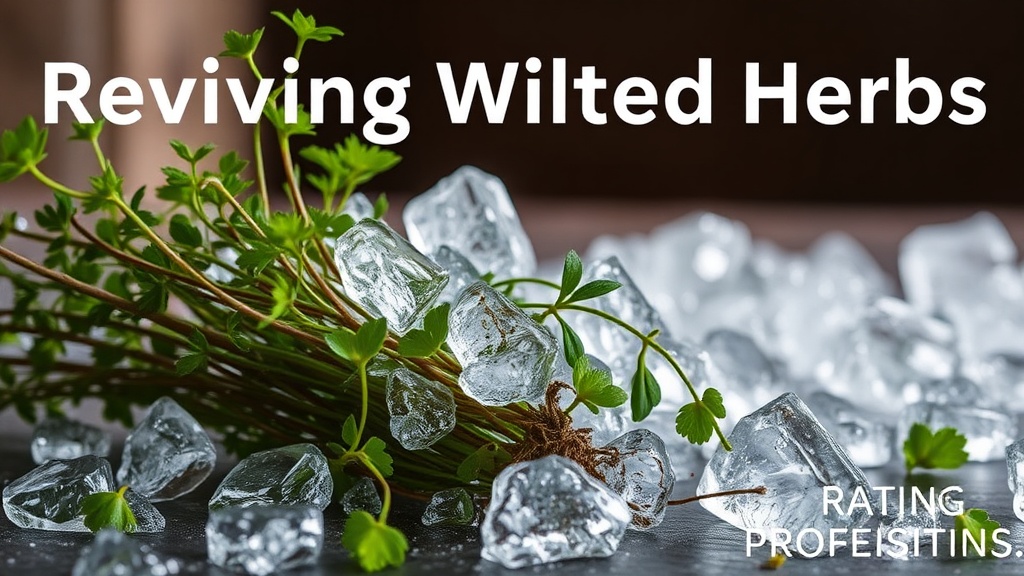
Reviving Wilted Herbs with the Ice Water Shock Method

Quick Tip
Submerge wilted herbs in an ice water bath for 10-15 minutes to restore turgor pressure and crispness.
Reviving Wilted Herbs with the Ice Water Shock Method
You can restore the turgidity and vibrant color of limp basil, cilantro, or parsley using a simple thermal shock technique. This method relies on the principles of osmosis to rehydrate the plant cells that have lost internal pressure due to evaporation.
The Science of Turgor Pressure
When herbs wilt, they aren't necessarily "dead"; rather, they have lost turgor pressure. This is the internal fluid pressure that pushes the cell membrane against the cell wall, keeping the leaves upright and crisp. By introducing a sudden temperature differential, you encourage the plant cells to rapidly absorb water through their stomata and cell walls, effectively "inflating" the cells back to their original state.
The Step-by-Step Execution
To achieve professional results, follow this specific protocol. Do not skip the drying stage, as excess moisture can lead to premature rot if the herbs are stored incorrectly afterward.
- Prepare the Ice Bath: Fill a medium-sized stainless steel or glass bowl with cold water. Add a generous handful of ice cubes. The water temperature should be as close to 33°F (0.5°C) as possible without freezing.
- Trim the Stems: Use sharp kitchen shears or a Global paring knife to trim approximately half an inch off the bottom of the herb stems. This opens the vascular bundles (xylem) to facilitate faster water uptake.
- The Submersion: Place the herbs into the ice water. For flat-leaf herbs like parsley, ensure they are fully submerged. For delicate herbs like mint, you may want to use a weight, such as a small ceramic saucer, to keep them under the surface.
- The Shock Duration: Let the herbs sit in the bath for 15 to 30 minutes. Monitor the leaves; once they appear firm and upright, remove them immediately.
- The Drying Phase: Lift the herbs from the water and shake them gently to remove excess droplets. Lay them on a clean linen kitchen towel or a layer of high-quality paper towels.
Pro-Tips for Long-Term Storage
Once revived, treat your herbs with care to maintain their structural integrity. For woody herbs like rosemary or thyme, a damp paper towel inside a reusable container works best. For soft herbs like basil, which are sensitive to cold, store them at room temperature in a jar of water, similar to how you would treat a bouquet of flowers. This technique is particularly useful when you are preparing for large-scale events or seasonal gatherings, such as an eco-friendly brunch, where fresh garnishes are essential to the visual presentation.
"Precision in the kitchen often comes down to managing the physical properties of your ingredients. A controlled temperature shift can be the difference between a bruised garnish and a pristine, professional finish."