Building a Better Bird: Why Salt and Air Are Your Best Kitchen Tools

You pull the roasting pan from the oven, and the chicken looks perfect—golden, shimmering, smelling of rosemary and rendered fat—but the moment your knife touches the breast, the skin gives way like wet paper. It's a heartbreak every cook knows. This failure doesn't stem from your oven temperature or the quality of your bird; it starts 24 hours earlier on a wire rack in your refrigerator. Dry-brining isn't just a trend; it's a fundamental shift in how we manage moisture and surface tension in the kitchen. If you want meat that stays succulent and skin that shatters like glass, you have to stop thinking of salt as a mere seasoning and start treating it as a tool for structural engineering.
When I was working in kitchens across Europe, the first thing I noticed was how little we actually did to the meat right before it hit the pan. The work happened days in advance. We'd have rows of ducks and chickens sitting uncovered in the walk-in, looking slightly desiccated and unappealing. To the uninitiated, it looked like we were ruining the product. In reality, we were using the refrigerator as a controlled environment to strip away the one thing that prevents a perfect roast: surface moisture. Water is the enemy of the Maillard reaction—that beautiful chemical dance where amino acids and sugars transform into those deep, savory flavors we crave.
Why does salt make meat juicier instead of drying it out?
It seems counterintuitive. We've all seen what salt does to a slug or a piece of eggplant—it draws the water out. In the first few minutes of dry-brining, that's exactly what happens to your steak or chicken. You'll see tiny beads of moisture forming on the surface as osmotic pressure pulls liquid from the muscle cells. But if you walk away and give it time, something fascinating occurs. That concentrated brine begins to break down the tightly wound protein structures, specifically a protein called myosin. Once these proteins are denatured, they relax, allowing the meat to re-absorb that salty liquid.
This process doesn't just season the meat deeply; it changes its physical capacity to hold onto water. Think of the muscle fibers like a bundle of tight rubber bands. When they hit the heat of the oven, they contract and squeeze out their internal moisture (this is why your carving board often ends up in a puddle). By breaking those bands down with salt beforehand, they can't contract as forcefully. The result is a bird that retains its juices even as the internal temperature climbs. For a deeper look at the chemistry of protein denaturing, Serious Eats provides a fantastic breakdown of how these salt-protein interactions function at different temperatures.
Does the type of salt actually change the results?
In the world of professional cooking, we're obsessive about the architectural shape of our salt crystals. If you're using standard table salt, you're likely over-salting your food. Table salt is incredibly dense and fine, meaning a single tablespoon contains nearly twice as much sodium by weight as a tablespoon of Diamond Crystal Kosher Salt. For dry-brining, you want a coarse flake that you can see and feel. It allows for more even coverage and won't dissolve instantly into a harsh, metallic brine.
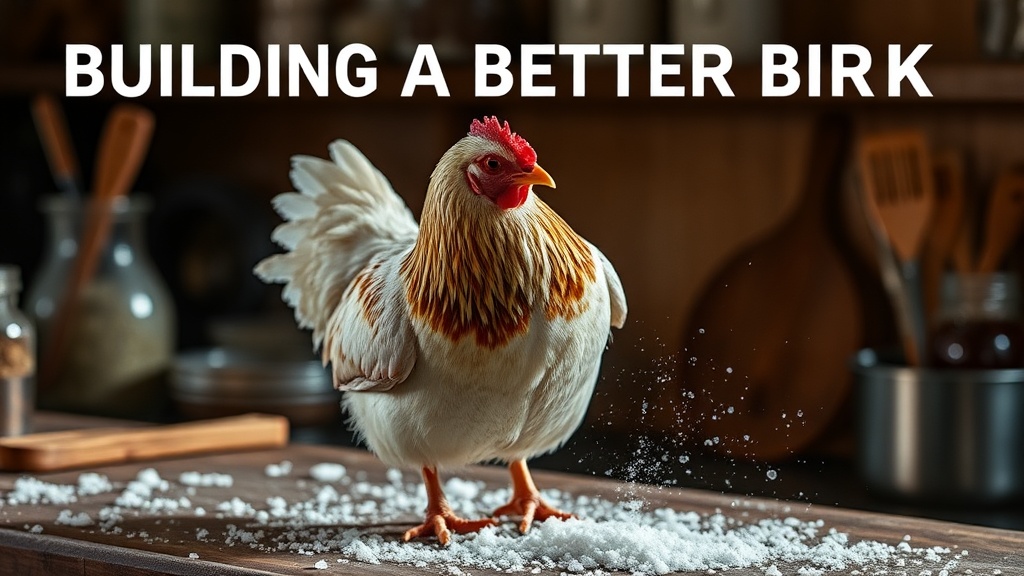
I prefer the light, hollow flakes of kosher salt because they adhere to the skin's natural topography without sliding off. When you sprinkle it from a height—aiming for what looks like a light dusting of snow—you're creating an even layer of potential energy. This isn't just about taste; it's about ensuring that every square inch of the skin undergoes the same dehydration process. If you're curious about the specific densities and mineral contents of various salts, the experts at Harold McGee’s On Food and Cooking site offer a wealth of information on how different salts affect the molecular structure of food.
How long should you let the bird sit in the fridge?
Patience is the hardest ingredient to source, but it's the most vital one here. A quick thirty-minute salt isn't dry-brining; it's just seasoning. For a standard four-pound chicken, you need at least 12 hours. For a large turkey, you're looking at 24 to 48 hours. During this window, two distinct things are happening. First, the salt is traveling toward the center of the meat. Second, the refrigerator's fan is constantly moving dry air over the skin, evaporating the remaining surface moisture until the skin feels like parchment paper.
If you leave a bird in the fridge for too long—say, beyond three days—the meat can start to take on a cured, ham-like texture. It's still safe to eat, but you'll lose that fresh poultry flavor. The sweet spot is usually the 24-hour mark. You'll notice the skin becomes translucent and tight against the meat. This is a sign that the 'pellicle' has formed. When that dry, salt-cured skin hits the rendered fat in the oven, it fries instantly. It doesn't steam. It doesn't flab. It just crisps.
The equipment you use matters just as much as the time. Don't just throw the chicken on a plate and stick it in the fridge. You need airflow beneath the bird. Use a wire cooling rack set inside a rimmed baking sheet. This ensures the back of the bird doesn't sit in its own juices, which would result in soggy, pale skin on the underside. It's a simple setup—one that mirrors the expensive dry-aging rooms of high-end steakhouses—and it makes a world of difference in the final texture.
When it finally comes time to cook, resist the urge to baste. I know, every 1950s cookbook tells you to spoon juices over the bird every twenty minutes. Ignore them. Every time you pour liquid over that perfectly dried skin, you're re-hydrating it. You're effectively steaming your chicken in a dry oven. The fat underneath the skin will do all the work of keeping the exterior lubricated. Trust the process, trust the physics, and keep that oven door closed until the thermometer tells you it's done. You've spent a day preparing the architecture of this meal; don't tear it down in the final hour.